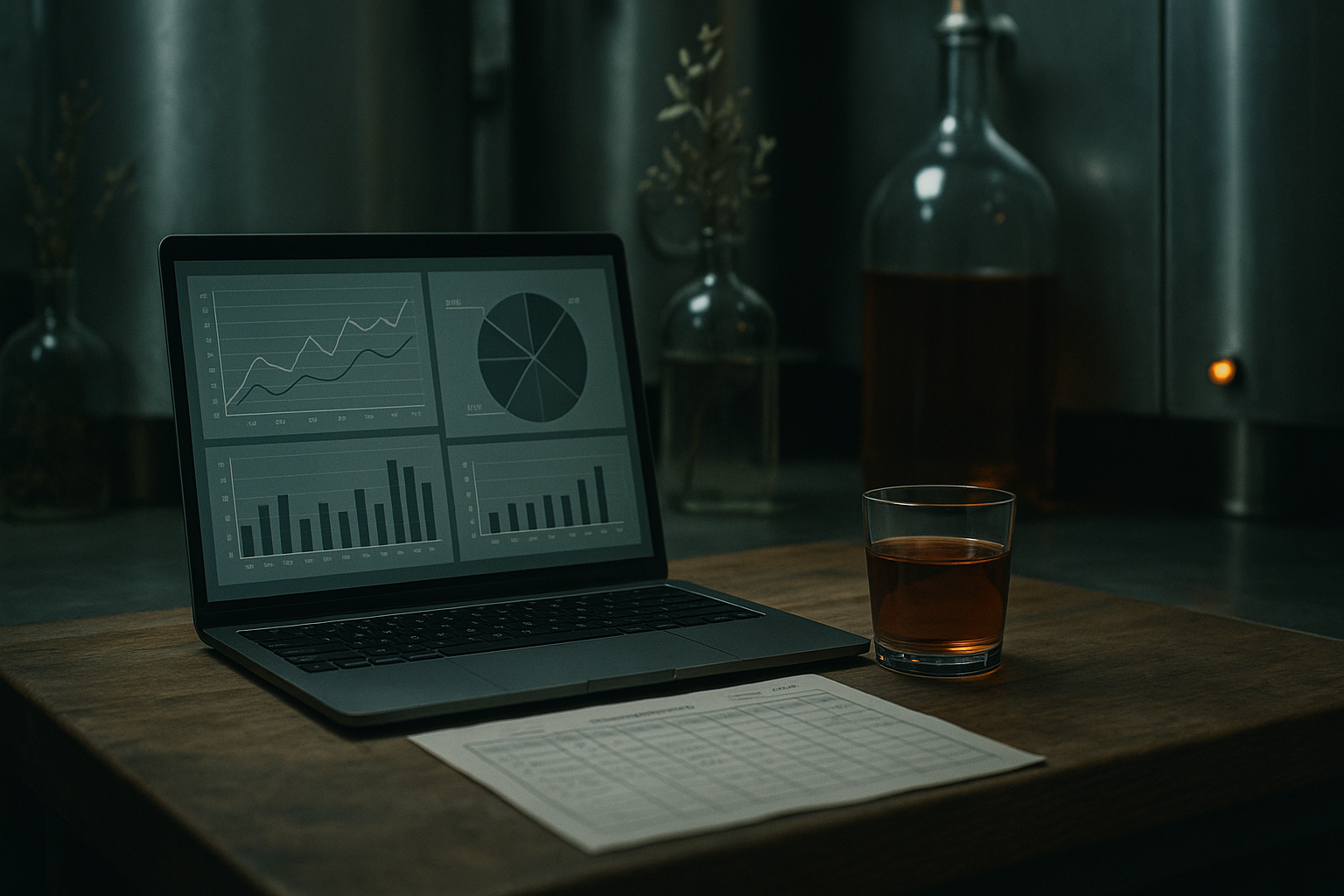
I have built an integrated AI demand planner that pulls our data from all our sales sources. Distributor, exporter, D2C, B2B. It pulls all that data, analyses it, creates a full forecast as in bulk orders, tracks all our bespoke production, raises purchase orders, and even has agents searching for better pricing and negotiating with suppliers on our behalf. This just frees up our team to focus on the production and the creation of recipes rather than the administrative tasks of thinking about timing, bottling runs, emailing suppliers, and shifting data and logistics around.
I want to be clear about where I am speaking from. I am both maker and technologist. By day I run production and operations for a small batch drinks company in South London. In the margins, I build the AI systems that keep that operation running. This is the operational stuff nobody writes LinkedIn posts about: the spreadsheets, the supplier chase, the reorder thresholds calculated on the back of delivery notes. If you are running a small producer with real stakes and thin margins, you know exactly what I mean.
Why I had to build rather than buy
The obvious question is why not just use one of the many supply chain SaaS products on the market. I looked at them. The problem is always the same: they are built for a generic business shape, and every real business has a specific shape. You end up retrofitting your operations to fit their data model. You spend more time feeding their system than getting value from it.
KPMG's 2024 research on AI-enabled supply chain planning makes clear that integrated AI systems built around specific operational constraints outperform generic tools that force standardised workflows. The real gains come from systems that map to your actual data sources and production logic, not the other way around.
I built this from the ground up around our own shape. That allowed me to make all sorts of design decisions that really benefit us. We are not locked into massive SaaS tools, locked into ecosystems that degrade over time, that rely on slow-to-respond support systems. The complexity and amount of data flowing through, and the calculations and suppliers and orders that have to be maintained, make this the only sensible way to operate in 2026.
What the system actually does
The demand planner connects to our Shopify store, our trade portal, our distributor order systems, and our export documentation. It reads order patterns, inventory levels, and production capacity. It predicts what we will need to produce in the next bulk run, when we will need to order botanicals, and which suppliers are offering better terms.
The key is that it does not just report. It acts. Purchase orders get raised automatically when inventory hits thresholds. Supplier agents negotiate pricing based on volume projections. The production schedule adjusts based on confirmed orders and demand signals. Humans review and approve, but the system does the heavy lifting.
How I thought about build versus buy
Every small producer faces this calculation. Do you invest in custom tooling or work with what is available off the shelf? My experience suggests a simple rule. If the decision is about standard processes that every business does the same way, buy. If the decision is about your specific operational logic, build.
| Decision Type | Buy | Build |
|---|---|---|
| Accounting and bookkeeping | Xero, QuickBooks | Rarely worth custom |
| Generic CRM | HubSpot, Salesforce | Only if highly specific workflows |
| Demand forecasting for bespoke production | Generic tools miss the complexity | Custom system integrated to your data |
| Supplier negotiation and procurement | Not available as off-the-shelf | Agent-based systems feasible now |
The practical architecture
I want to be specific about what I actually built, because vague claims help nobody. The system has three layers. Data ingestion pulls from all our sales and inventory sources. Analysis runs demand forecasting models on that data. Action generates purchase orders, supplier outreach, and production scheduling.
The analysis layer is where the AI lives. It looks at historical patterns, seasonal trends, and current pipeline. It predicts not just total volume but product mix. Some of our vermouths are seasonal. Some are year-round staples. The model learns these patterns and adjusts forecasts accordingly.
What this enables for a small team
We are six people. Two of us handle production. Two handle sales and relationships. One handles finance and operations. I move between the technical and commercial sides. There is no dedicated supply chain department. There is no data science team.
ONS data on UK productivity trends shows output per hour growing weakly across small business sectors. The demand planner effectively adds capacity without adding headcount. The system works 24 hours a day. It never forgets to check inventory. It never misses a reorder threshold. It negotiates with suppliers while the team is asleep. This is how small producers compete with larger operations that have dedicated departments for these functions.
Automate UK's 2024 Industry Insights highlights that automation is increasingly seen as essential to long-term productivity and resilience for smaller manufacturers. For a six-person team, those capabilities are not incremental efficiencies. They are the difference between keeping up and falling behind.
Lessons from the build process
Building custom tools is not without risk. I made mistakes along the way. Early versions were over-engineered, trying to handle edge cases that never actually occurred. I learned to start simple and add complexity only when operational reality demanded it.
The other lesson is about integration. A system that does not talk to your existing tools is worse than useless. Every data source needs a clean connection. Every output needs to land where your team actually works. I spent more time on integration plumbing than on the AI logic, and that time was well spent.
What comes next
The system we have today handles forecasting, procurement, and production scheduling. The next layer is quality prediction: using data to anticipate which batches might need attention before problems show up in tasting. That is harder, and we are approaching it carefully.
We document what we learn at Absolution Labs. The patterns are more transferable than the specific code. How to think about build versus buy. How to design for integration. How to keep humans in the loop for decisions that matter while automating the ones that do not.
Frequently asked questions
How can small drinks producers use AI for demand forecasting?
Small producers can build integrated AI demand planners that pull data from all sales sources (distributor, exporter, D2C, B2B), analyse patterns, create forecasts for bulk orders, track bespoke production, raise purchase orders, and even search for better supplier pricing. The key is building around your specific business shape rather than retrofitting to generic SaaS tools.
What is the build-versus-buy decision for production intelligence?
For small producers with specific workflows, building custom tools often wins over buying generic SaaS. Off-the-shelf tools lock you into ecosystems that degrade over time with slow support. Custom systems can be designed around your exact shape, integrating your specific data sources and production constraints.
What data sources feed an effective demand planner?
Effective demand planners integrate data from all sales channels: distributor orders, export shipments, direct-to-consumer sales, and B2B accounts. The system analyses historical patterns, current inventory levels, and production capacity to generate actionable forecasts.
How does automation help small producers without technical teams?
Modern AI tools allow small producers to build sophisticated systems without large technical teams. The key is focusing on your domain expertise (what your business needs) and using AI to handle the implementation complexity. Build for the shape of your business, not the shape of someone else's tool.