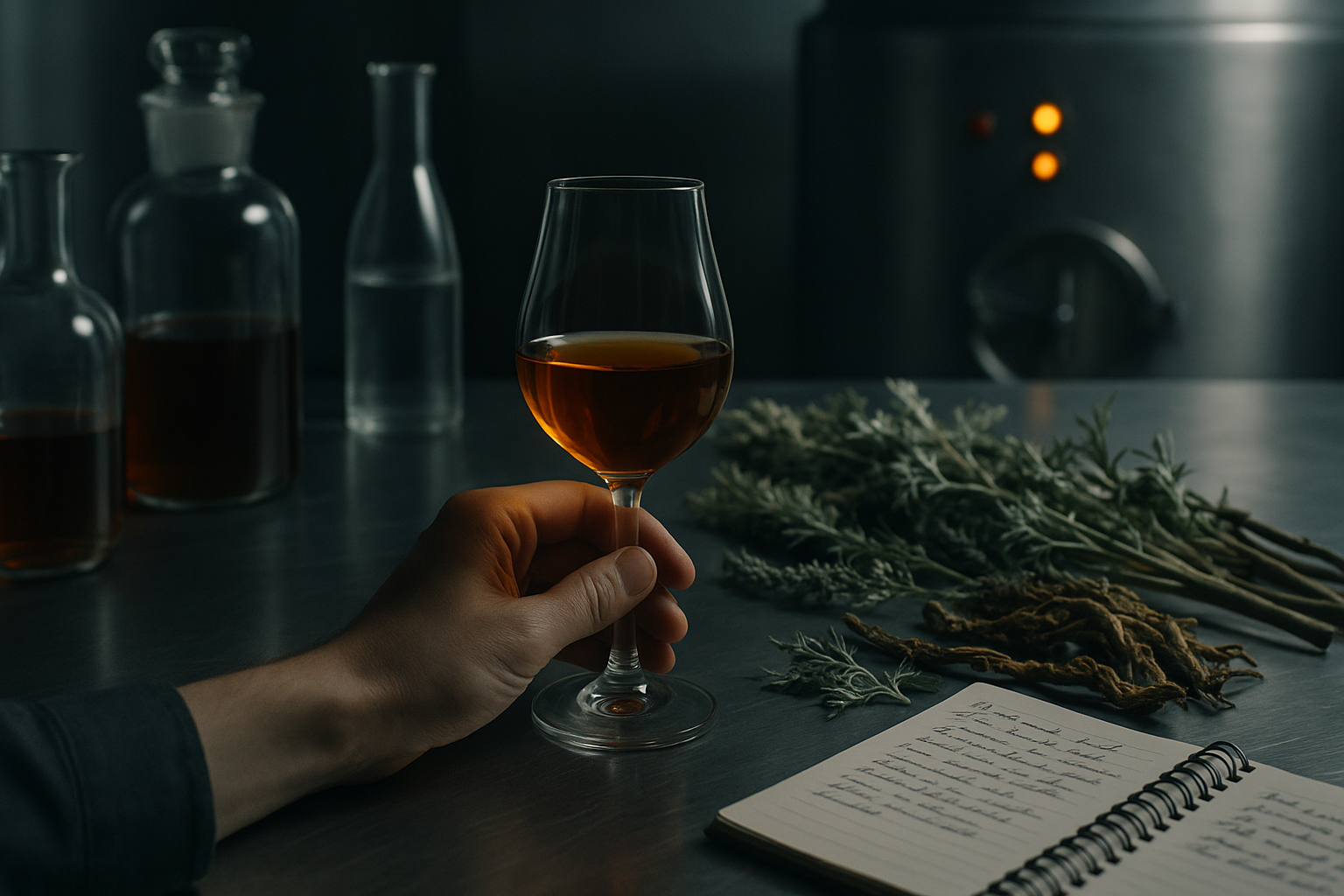
I have been on both sides of the AI and drinks manufacturing divide for a while now. By day I am a maker: slow maceration and ageing with raw botanicals, no distillation, working in a small batch operation with a team of six in South London. In the margins, I build the AI systems that run our demand planner, our purchase order automation, and the agents that negotiate with suppliers. This is honest dispatch from someone doing both. I want to tell you where the line actually sits between what AI can handle and where craft judgement still has to win.
The line is clearer than most people think
There is a genuine question here that deserves a straight answer. Where exactly does automation stop being helpful and start becoming intrusive? From where we sit, the boundary is surprisingly clean. McKinsey's research on AI-powered demand forecasting confirms what we have found: AI excels at information flow. It struggles with sensory evaluation. The moment a decision requires taste, smell, texture, or aesthetic judgment, a human needs to make it.
We have built an integrated demand planner that pulls data from all our sales channels. It analyses trends, forecasts bulk orders, tracks bespoke production, raises purchase orders, and even has agents searching for better supplier pricing. These are all information tasks. They involve no sensory input. The system does not tell us which botanicals to use. It tells us how much volume we are likely to need.
What the human still has to do
Every day on the production floor involves sensory work. NPD has accelerated hugely in 2026. We are developing more varied and more esoteric products than ever. The team are working harder than ever on creating new products, and every batch involves judgement calls a tool could not make.
Choosing which base wine has the structure to carry a particular recipe. Determining which botanical harvest has the right profile for the batch we are building. Deciding when the maceration is complete. These are not information problems. They are sensory problems. The answer comes from experience, from training, from the accumulated knowledge of what this particular liquid should taste like.
ONS business dynamism data shows that even as automation spreads across production sectors, craft and sensory-led manufacturing remains stubbornly human-dependent. The numbers confirm what any maker already knows: you cannot automate the palate.
How automation protects the craft
The conventional framing casts automation as a threat to craft. In our experience, the opposite is true. By removing humans from the data-feeding and administrative roles, we free them for the creative and evaluative work that actually matters. A maker who spends their morning updating spreadsheets is not making. They are doing paperwork. AI can handle the paperwork.
| Task Type | AI Handles | Human Required |
|---|---|---|
| Demand forecasting | Pattern recognition across sales channels | Interpretation and override based on market knowledge |
| Purchase orders | Automated generation when thresholds hit | Supplier relationship management and quality disputes |
| Botanical selection | Inventory tracking and reorder alerts | Harvest evaluation and recipe adjustment |
| Maceration timing | Timer and temperature logging | Sensory evaluation of extraction completeness |
The practical reality of running both systems
We built our demand planner from the ground up around our own shape. That allowed us to make design decisions that really benefit us. We are not locked into massive SaaS tools with slow-to-respond support systems. The complexity and amount of data flowing through, and the calculations and suppliers and orders that have to be maintained, make this the only sensible way to operate in 2026.
But I want to be careful here. The tooling is only as good as the thinking behind it. A badly designed automation system can cause more problems than it solves. The key is knowing which decisions the system should make and which it should surface to a human for judgment.
What this means for you as a producer
If you are running a small drinks business, the question is not whether to adopt AI. It is where to apply it. Start with the workflows that are pure information: demand planning, inventory management, order processing. Leave the sensory work alone. Your competitive advantage is your palate, your instincts, your accumulated judgment about what good tastes like.
This is the operational stuff that nobody writes LinkedIn posts about. The real stakes and thin margins of running a small batch operation. The maker and the technologist are not two different people here. They are the same person, trying to keep the craft in the craft while removing the friction from everything else. We document the systems we build at Absolution Labs. Not because we think every producer should use our exact setup, but because the principles transfer. Build for the shape of your business. Do not retrofit your business to the shape of someone else's tool.
Frequently asked questions
What parts of craft production can AI actually help with?
AI is genuinely useful for workflows around production: admin, communications, data analysis, demand forecasting, purchase order generation, and supplier negotiation. These are information-flow tasks that do not involve sensory evaluation.
What decisions in vermouth production still require human judgement?
Every batch involves judgement calls a tool cannot make: choosing which base wine has the structure to carry the recipe, which botanical harvest has the right profile, and determining when the maceration is complete. These require taste, sensation, smell, aroma, and texture evaluation.
How has AI changed new product development at Asterley Bros?
NPD has accelerated hugely in 2026 because AI handles the administrative overhead, freeing the team to focus on sensory work. More varied and esoteric products are being developed than ever before because the makers can concentrate on creation rather than paperwork.
Why can't AI replace sensory evaluation in craft spirits?
The iterative work of evaluating taste, sensation, smell, aroma, and texture is only done with human senses. There is no technological substitute for a trained palate determining whether a botanical maceration has reached its optimal extraction point.